Why We Burn Out, Blow Up, and Bring the Past to the Present
Forthcoming • November 2026
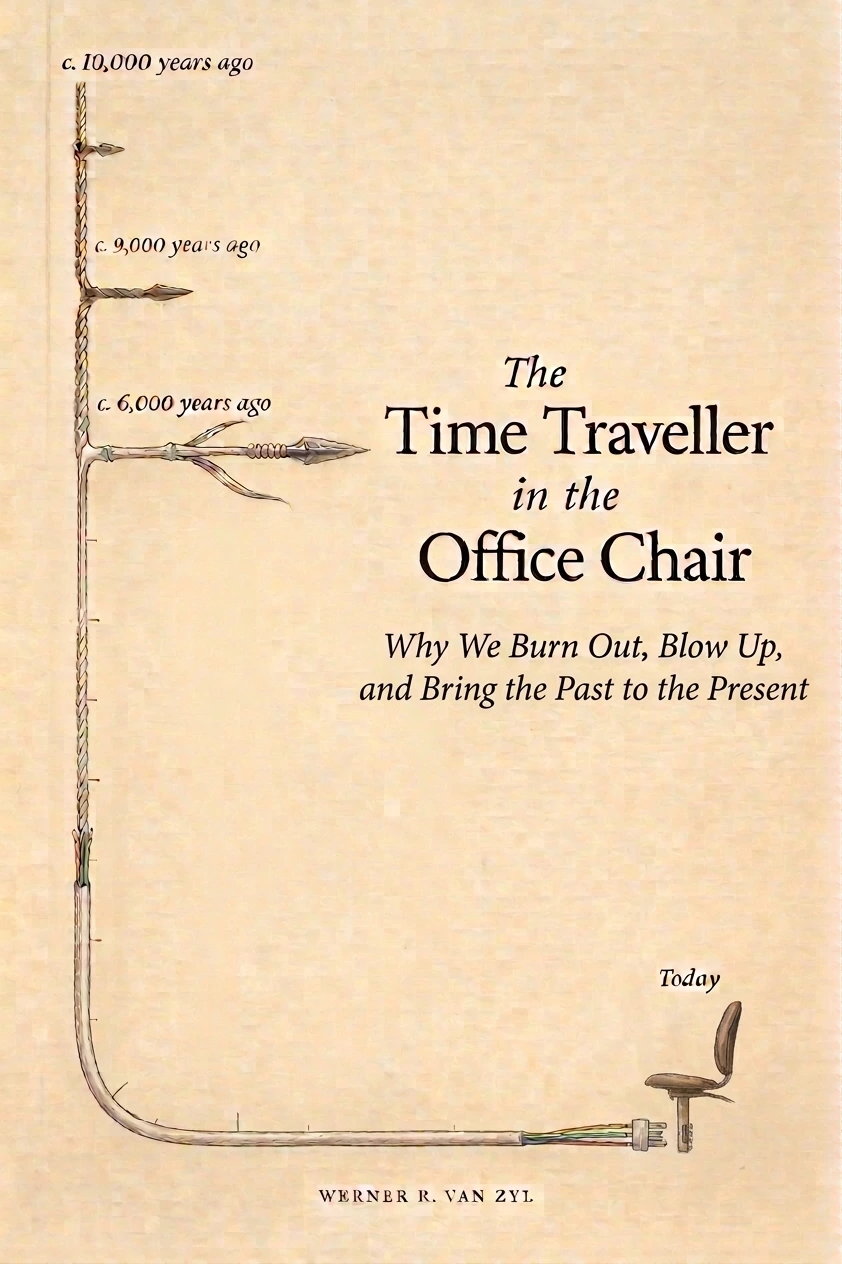
"We weren't designed for the world we designed. "
Modern humans are remarkably good at adapting. But adaptation takes time.
Our technology, workplaces, social environments and information systems can change within years — sometimes within months. The human machinery navigating those environments is the product of a much slower process. So what happens when an organism shaped by one world finds itself living in another?
That is the question at the heart of The Time Traveller in the Office Chair.
You are tired, but this is not conventional fatigue; you are trembling. You are sitting in a comfortable office chair in a climate-controlled room, safe from predators, yet your heart is hammering a rhythm of imminent death. You check your phone, not for news, but because your brain is addicted to the flicker of potential; it is the hunt, not the capture, that keeps the circuit humming. You are a biological masterpiece—an organism refined over millions of years to survive the savannah—currently tasked with surviving a Zoom call that could have been an email. You feel broken. You feel like everyone else has read a manual you were never given. But you are not broken. You are simply a Time Traveller who has landed in the wrong century.
— Preface, the Time Traveller in the Office Chair
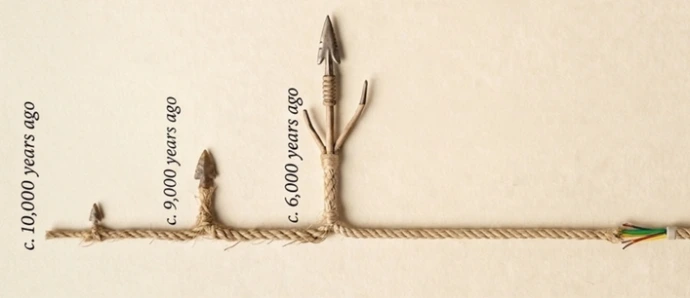
Imagine bringing a human being from 10,000 years ago into the modern world.
Give them a few moments to look around. The buildings would be strange. The machines incomprehensible. The pace overwhelming. The amount of information almost impossible to imagine.
And yet, underneath it all, they would still be human.
Their brain would be working with much the same basic machinery as ours. In a sense, that is exactly what has happened to us.
We are the time travellers. And the office chair is where we landed.
A world that changed faster than we did
For most of human history, our environments changed relatively slowly.
Then the pace accelerated. Agriculture transformed how we lived. Cities transformed how we organised ourselves. Industry transformed how we worked. Technology transformed how we communicated. The internet transformed how we access information.
And now artificial intelligence is beginning to transform the relationship between humans and the systems we have built. The environment keeps changing.
But the organism inside it remains recognisably human. The result is not simply a problem of technology.
It is a problem of mismatch.
EVOLUTION
The biological machinery we inherited — and the environments that shaped it.
ENVIRONMENT
The world we construct around ourselves, and the ways that environment begins to shape us in return.
TECHNOLOGY
What happens when the rate of technological change exceeds the rate at which humans can adapt?
BEHAVIOUR
Why behaviours that once made sense can persist long after the environment that produced them has changed.
ORGANISATIONS
What happens when ancient social and psychological tendencies meet modern institutions, workplaces and system?
DESIGN
How the things we create do more than solve problems. They create new environments that influence the people living within them